
2026-09-13 ·
Common Causes of Attic Water Damage During Hudson Valley Storms
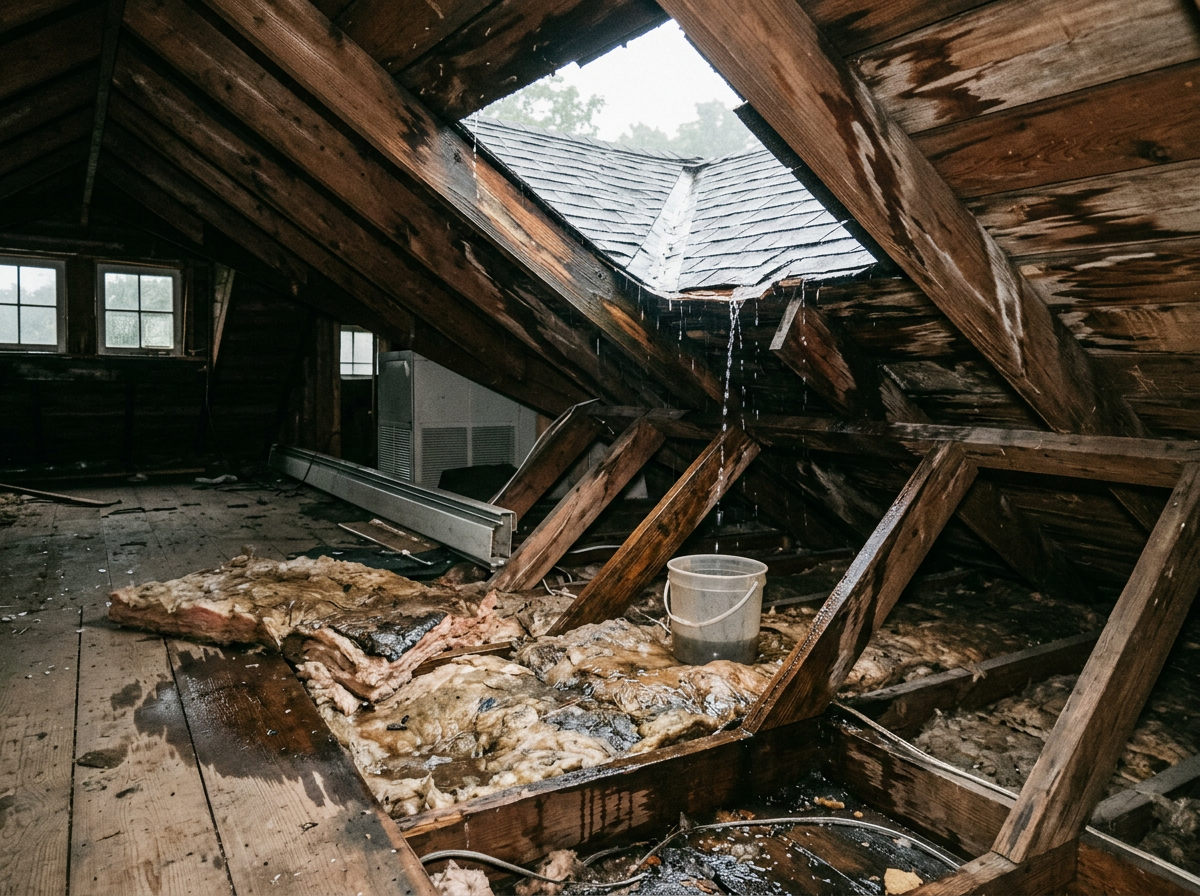
Attic water intrusion during Hudson Valley storms most often traces to ice dams on older roofs and wind-driven rain entering through vents or flashing failures, particularly in 19th-century homes with steep pitches near the tidal Hudson.
Ice Dams on Sloped Roofs
Ice dams form when January and February temperatures hover near freezing, allowing snow to melt on warmer roof sections then refreeze at the eaves. This creates a barrier that forces water under shingles and into attic spaces. Homes built on river slopes in places like Irvington and Dobbs Ferry see this pattern repeatedly because their fieldstone foundations and steep pitches trap heat unevenly. Once water reaches insulation or rafters, it can degrade from Category 1 to Category 2 within roughly 48 hours. Homeowners notice sagging ceilings or stained drywall first in the upper floors. Checking for ice buildup after each nor'easter and ensuring gutters stay clear reduces the chance of backup. When damage appears, prompt assessment prevents further spread into living areas.
Wind-Driven Rain and Vent Failures
Strong winds during coastal storms push rain horizontally through attic vents, ridge caps, and poorly sealed flashing around chimneys. These entry points are common in older housing stock throughout the Hudson Valley where original construction did not account for modern storm intensity. Water then pools on attic floors and soaks into cellulose insulation or wooden beams. Moisture meters later confirm saturation levels that support mold growth on organic materials within 24-48 hours. Residents in areas such as Hastings-on-Hudson and Tarrytown report this issue after prolonged nor'easters when power outages also disable any active ventilation. Sealing vents with proper baffles and inspecting flashing annually limits exposure. Professional evaluation becomes necessary once water reaches structural wood.
Clogged Gutters and Overflow Patterns
Heavy rainfall combined with fallen leaves overwhelms gutters on many Hudson Valley homes, causing overflow that runs behind fascia boards and into attic eaves. This occurs frequently in neighborhoods with mature trees near the river. Overflow water travels along roof planes and finds gaps at valleys or dormers. Once inside, it travels along rafters and can reach drywall ceilings below. Drying verified with moisture meters typically requires several days of dehumidification to reach safe humidity targets. Linking this issue to broader water management helps owners see the connection between exterior maintenance and interior protection. Water damage restoration addresses the drying process when overflow has already entered the structure.
Condensation from Temperature Shifts
Rapid temperature drops after a storm can cause warm attic air to condense on cold roof sheathing, especially in homes with inadequate ventilation. This moisture accumulates on nails and rafters and eventually drips onto insulation. In the Hudson Valley's variable winter climate, this process repeats during successive freeze-thaw cycles. Over time the accumulated water supports mold colonies on wood and paper-faced materials. Checking attic humidity after storms and improving airflow prevents repeated cycles. When mold appears, targeted removal protects the rest of the home. Mold remediation focuses on affected attic zones without unnecessary disruption to living spaces.
Understanding these storm-specific pathways allows owners to prioritize inspections after each event. Addressing small leaks early limits the need for larger interventions later.