
2026-09-13 ·
Emergency Water Shutoff Locations in Older Homes
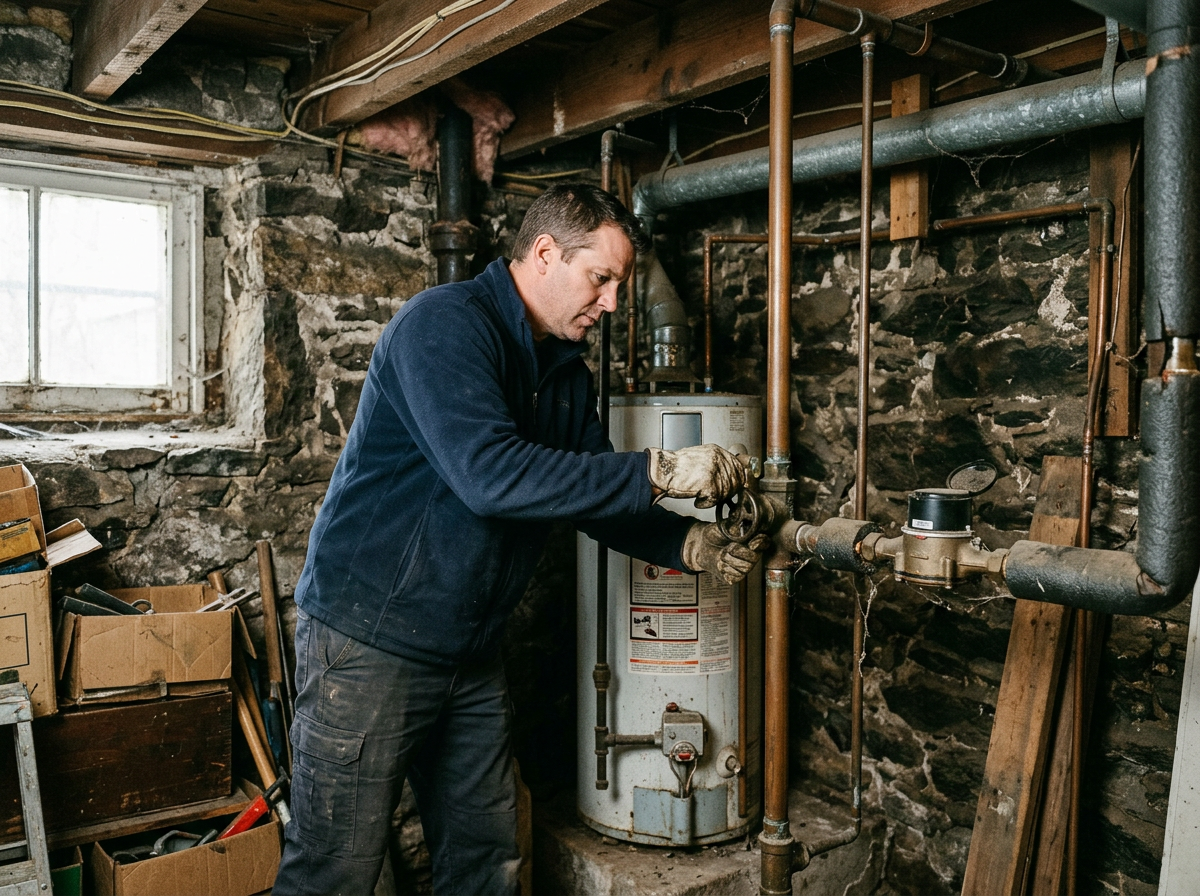
In 19th-century Hudson Valley homes the main water shutoff valve is typically found within 3 feet of the fieldstone foundation wall where the service line enters the basement, often right next to the water meter. This location gives quick access during a burst pipe or ice dam event before Category 1 water turns into Category 2 within 48 hours.
Main Shutoff Valve Locations in Fieldstone Basements
Older river-slope houses in Tarrytown and nearby towns route the municipal line through the lowest point of the fieldstone wall. Walk along the foundation on the street side of the basement and look for a gate valve or ball valve mounted 12 to 18 inches above the floor. If the home has been updated, the valve may sit inside a small access panel covered by a metal plate. Test the valve twice a year by turning it clockwise until it stops, then reopen it fully to keep it from seizing during a January freeze. Homes built before 1920 sometimes have an additional curb stop in the front yard that requires a special key from the water department.
Shutoff Points Near Sump Pumps and Nor'easter Failures
When a nor'easter knocks out power, sump pumps stop and water backs up through the floor drain. The shutoff for the entire house supply is usually on the same wall as the sump, about 4 feet from the pump pit. Shut this valve first, then locate the individual fixture shutoffs under sinks if only one line is leaking. In homes along the tidal Hudson, the main valve can also sit behind the water heater because that is where the line rises from the foundation. Keep a flashlight and a 10-inch adjustable wrench on a shelf within reach of this spot so you can reach it in under two minutes during a power outage.
Additional Valves for Frozen Pipes in Winter
January and February temperatures below 20 degrees often freeze pipes that run along exterior fieldstone walls. Each bathroom and kitchen has its own shutoff valve under the sink or behind the toilet; these are quarter-turn ball valves installed during later renovations. If the main valve is stuck, close the fixture valves first to isolate the problem. In homes with finished basements the valves may be hidden behind a finished wall panel near the laundry area. Mark their locations with small labels so every adult in the household can find them without searching during an emergency.
Why Quick Shutoff Matters Before Mold Appears
Once water contacts organic material such as wooden joists or insulation, mold can begin growing in 24 to 48 hours. Shutting off the supply at the foundation valve stops the flow before moisture meters register saturation levels above 20 percent. After the valve is closed, open all faucets on the upper floors to drain remaining pressure from the lines. This step reduces standing water that would otherwise migrate into the fieldstone and require emergency water removal. Homeowners in Tarrytown who practice this sequence often limit drying time to three to five days instead of facing extended remediation.
Practical Steps After the Valve Is Closed
Photograph the valve and meter reading before leaving the basement so you have a record for your insurance carrier. Place towels or a wet vac along the base of the fieldstone wall to catch any residual drip. If water has already reached finished flooring, contact a local team that offers water damage restoration to begin extraction and drying with moisture meters. Keep the valve closed until a plumber confirms the leak source. In river towns such as Irvington or Dobbs Ferry, tidal surges can push water back through the line, so leave the valve off until the storm surge recedes.