
2026-09-13 ·
How to Prevent Mold After Basement Flooding in the Hudson Valley
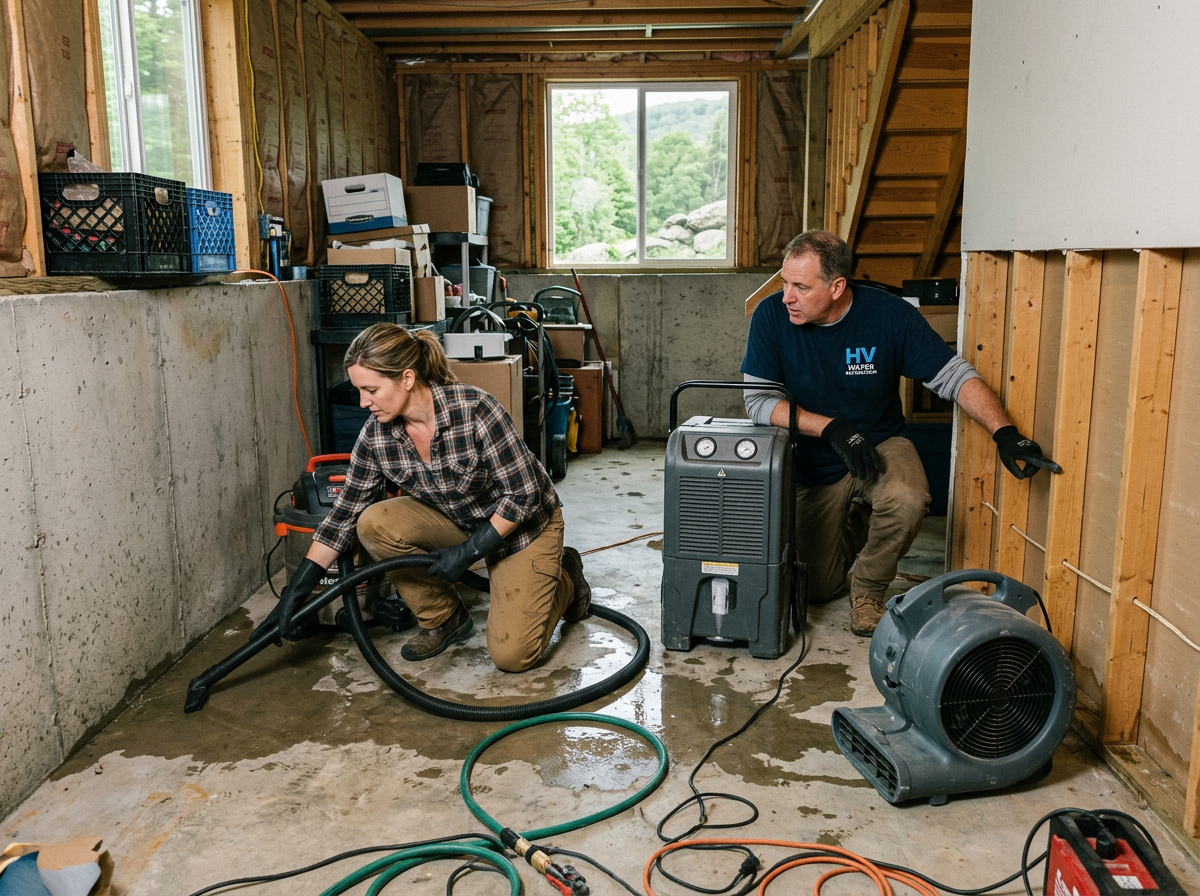
Mold begins forming on wet organic materials in Hudson Valley basements within 24-48 hours after flooding, so the direct prevention step is to extract all standing water and begin drying the space inside that window before Category 1 water degrades.
Remove Water Before It Degrades
Standing water from nor'easters or ice-dam failures must be pumped out immediately because Hudson Valley river-slope homes with fieldstone foundations allow moisture to seep into mortar joints and wood sills. Once the bulk water is gone, any remaining damp areas should be addressed with extraction tools to prevent the shift from clean to contaminated water that occurs in roughly 48 hours. Homeowners in Tarrytown and nearby river towns often see sump failures during power outages, which leaves sediment and organic debris behind that feeds mold colonies. Professional crews use truck-mounted pumps sized for these older basements so hidden pockets behind fieldstone are not overlooked. After extraction, surfaces should be wiped to remove silt that holds moisture against wood and drywall. Flooded basement cleanup crews familiar with 19th-century construction know where water travels along the slope of the lot and into crawl spaces attached to the main basement.
Dry the Space to Block Mold Growth
Drying must continue until moisture meters read normal levels on all affected materials because even small pockets of dampness in lath or subflooring allow spores to germinate. Hudson Valley winters bring low outdoor temperatures that slow evaporation, so fans and dehumidifiers need to run longer than in warmer months to reach safe interior conditions. Air should be moved across wet surfaces while humidity is pulled down so condensation does not form on cold fieldstone walls. Homeowners can check progress by feeling for cool spots on floors and walls that indicate trapped moisture. Typical drying takes several days when temperatures stay below freezing outside, and skipping this stage lets mold appear on baseboards within another day or two. Water damage restoration timeline for Tarrytown homes outlines the sequence local crews follow so residents understand why equipment stays in place until readings confirm dryness.
Monitor and Control Humidity After Initial Drying
Moisture meters should be used daily on wood framing and concrete to confirm levels have returned to the range that existed before the flood. In river towns, tidal influence and storm surge can reintroduce humidity through foundation cracks, so monitoring continues for at least a week after visible water is gone. Dehumidifiers set to pull air below 50 percent relative humidity keep conditions hostile to mold on organic materials left in storage areas. Homeowners should also inspect insulation that may have wicked water upward and replace any sections that remain saturated. If power is lost during a nor'easter, battery or generator backup for drying equipment prevents setbacks. Mold remediation becomes necessary only when monitoring is skipped and growth is already visible on surfaces.
Address Hidden Risks in Local Construction
Fieldstone foundations common in 19th-century Hudson Valley homes create many small voids where water lingers and mold starts unseen. Removing baseboards and checking behind them reveals whether water wicked into plaster or drywall from below. Sump pits should be cleaned of debris after each event so future power outages do not leave standing water against the foundation wall. Ice dams on roofs can send meltwater down interior walls and into the basement, requiring inspection of the sill plate area even when the floor appears dry. Residents in areas such as Irvington and Dobbs Ferry often deal with repeated seepage along the slope, making annual checks of grading and downspout extensions part of prevention. Keeping gutters clear before winter reduces the volume of water that reaches the foundation during January and February thaws.