
2026-09-13 ·
Choosing Materials for Repairs After Water Exposure
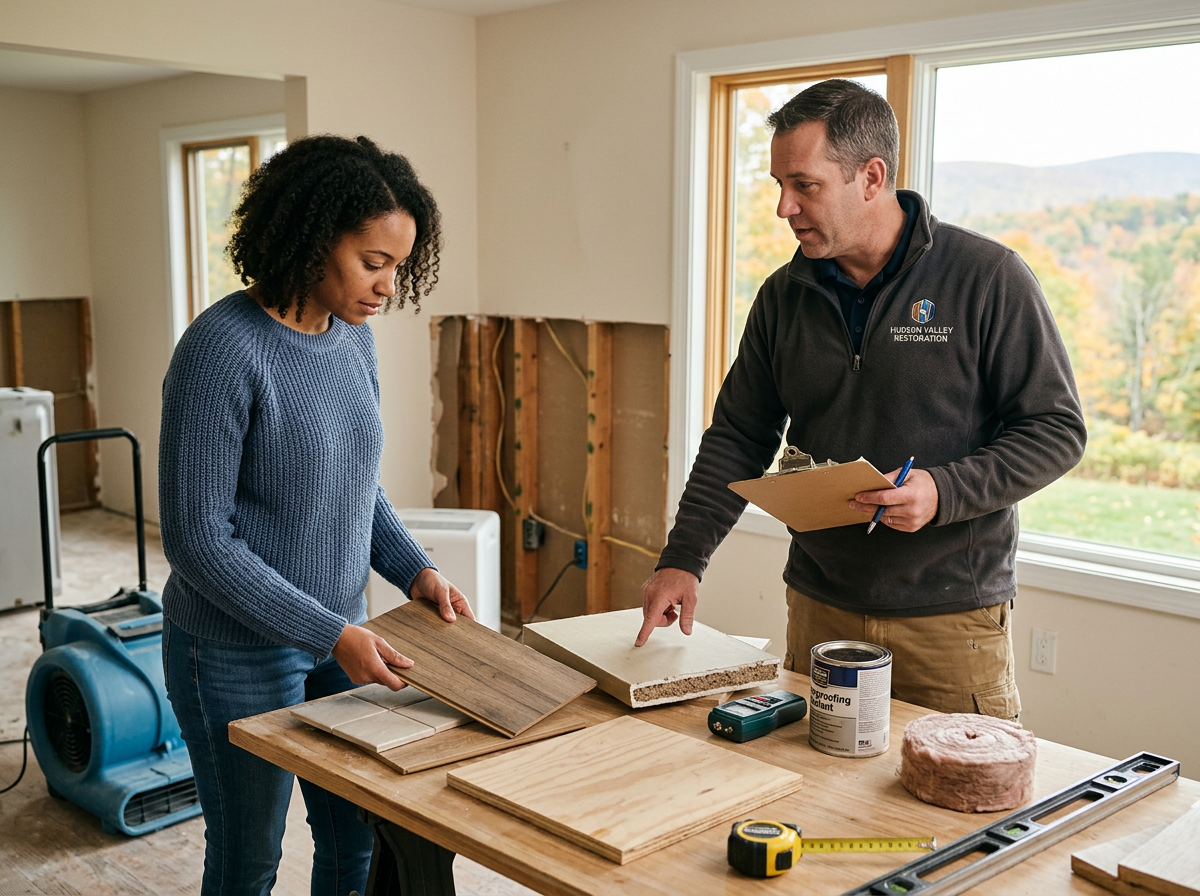
After water exposure in Hudson Valley homes, choose cement board or fiberglass-faced drywall for walls below grade and mold-resistant paints rated for 85 percent humidity once moisture meters confirm readings under 15 percent for at least 48 hours. These selections account for fieldstone foundations that retain dampness longer than modern concrete and for Category 1 water that shifts to Category 2 within roughly 48 hours if left untreated.
Evaluating Substrate Conditions First
Begin by confirming that all affected surfaces have dried to manufacturer specifications before installing new materials. In Tarrytown and nearby river towns, 19th-century homes often feature fieldstone foundations that weep during spring thaws or after nor'easter power outages, extending drying times to 5–7 days even with professional equipment. Use a pin-type or pinless moisture meter on multiple locations, including behind baseboards and inside wall cavities, targeting consistent readings below 15 percent. Skipping this step leads to premature material failure when hidden moisture migrates into new drywall or wood trim. Homeowners in areas like Dobbs Ferry or Irvington should also check for residual salts from tidal surge events that can affect adhesion of finishes.
Selecting Wall and Ceiling Materials
Replace standard paper-faced drywall with cement board or fiberglass-mat gypsum in basements and first-floor walls that have contacted floodwater. These products resist microbial growth better when humidity lingers near 60–70 percent during Hudson Valley summers. For ceilings damaged by ice-dam leaks, opt for 5/8-inch moisture-resistant board rather than standard 1/2-inch sheets to improve sag resistance once insulation is replaced. Apply a latex primer formulated for high-moisture areas before any texture or paint. Avoid vinyl wall coverings in wet zones because they trap vapor against the substrate and promote hidden mold colonies within 24–48 hours of re-wetting.
Flooring and Trim Choices
Install solid hardwood or engineered wood with moisture barriers only after subfloors test dry for three consecutive days. In homes near the Hudson, ceramic tile or luxury vinyl plank with attached underlayment performs better than carpet in rooms prone to sump-pump failures. Baseboards should be PVC or composite rather than MDF, which swells permanently when exposed to even small amounts of residual water. Caulk all joints with 100-percent silicone formulated for wet areas to reduce future wicking at floor-wall transitions common in older Tarrytown properties.
Coatings and Finishes for Long-Term Protection
Finish repaired surfaces with paints containing mildewcides and rated for 85–90 percent relative humidity. These products slow mold onset on organic materials that remain slightly damp after Category 1 water degrades. In kitchens and baths, use epoxy or urethane coatings on cement board instead of standard latex for added durability against repeated cleaning. Reapply sealers to fieldstone foundation walls with breathable masonry coatings rather than impermeable barriers that force moisture into framing. Water damage restoration teams can verify substrate readiness before these finishes are applied.
Integrating Repairs with Ongoing Prevention
Once materials are installed, maintain indoor humidity between 40–50 percent using dehumidifiers during winter months when frozen pipes and ice dams create repeat risks. Pair new drywall with improved ventilation in crawl spaces common along the river corridor. Review the related guidance in How to Prevent Mold After Basement Flooding in the Hudson Valley for additional steps that protect fresh repairs. Mold remediation becomes necessary only when moisture levels were not fully addressed before material replacement.
Document all meter readings and material specifications for your insurance carrier, as coverage decisions depend on the individual policy. Local crews familiar with 19th-century construction at 629 White Plains Rd, Tarrytown, NY 10591 can confirm drying progress before any new materials are ordered.