
2026-09-13 ·
DIY vs Professional Water Extraction for Minor Leaks
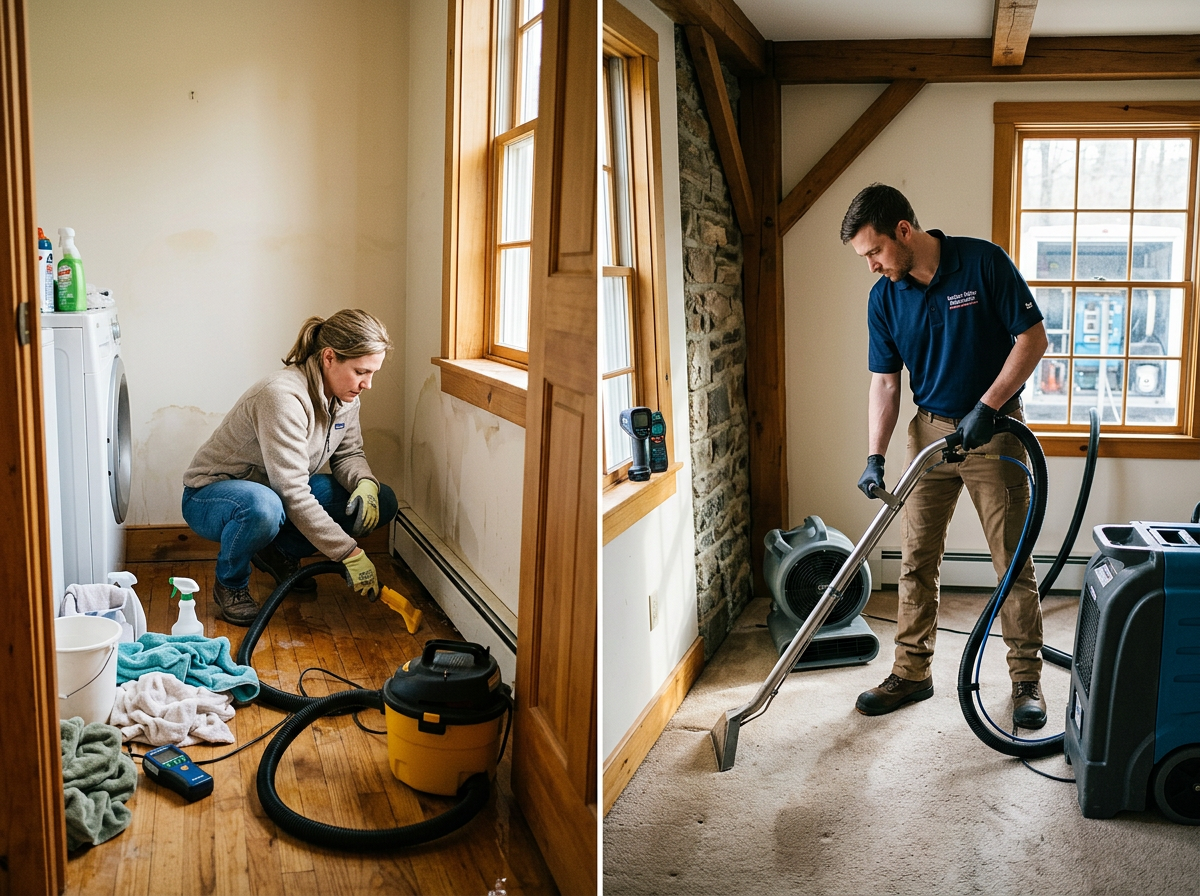
For minor leaks under a few gallons caught within the first 12 hours, DIY water extraction with a shop vac and household fans can remove standing water effectively when the affected area is small and accessible. Success depends on confirming that moisture does not remain trapped behind baseboards or within fieldstone foundations common to 19th-century homes along the tidal Hudson. In Tarrytown and nearby river towns, winter pipe bursts or sump failures during nor'easters often introduce water that starts as Category 1 but shifts toward Category 2 within 48 hours, raising the risk of mold on organic materials inside 24 to 48 hours. Homeowners who act quickly and monitor readings with a basic moisture meter can avoid escalation, yet many overlook saturation in mortar joints or subflooring that later requires targeted drying.
Assessing the Scope of a Minor Leak
Homeowners should first locate the source and measure the affected square footage before deciding on extraction methods. Leaks from frozen pipes in January or February typically affect basements with stone foundations that weep slowly, allowing water to travel along mortar lines rather than pool visibly. Check humidity levels in the space; targets below 60 percent help limit mold growth once water is removed. A moisture meter provides concrete readings on drywall and flooring, showing whether saturation stays localized. If readings exceed 20 percent after initial extraction or if water has reached carpet padding, the situation moves beyond simple DIY. Properties in areas like Irvington or Dobbs Ferry often share these foundation characteristics, making visual inspection alone unreliable. Documenting the leak with photos helps track progress and supports any later insurance discussion, which depends on individual policy terms.
DIY Water Extraction Steps
Begin by stopping the water source and removing as much liquid as possible with a wet/dry vacuum. Work in sections, emptying the tank frequently to avoid reintroducing moisture. Place box fans and a dehumidifier to promote airflow across the wet surfaces, aiming for consistent drying over the next 48 to 72 hours. Lift rugs and baseboards where feasible to expose edges, and check behind appliances or furniture that may trap dampness. Replace any soaked insulation or drywall sections that cannot be dried in place. Homeowners should recheck moisture levels daily; if readings do not drop steadily, professional equipment becomes necessary. This approach works best for surface-level spills on non-porous floors but struggles with the capillary action common in Hudson Valley fieldstone walls.
When Professional Extraction Becomes Necessary
Certain conditions make continued DIY efforts counterproductive, especially when water migrates into cavities or under finished flooring. Professional teams bring commercial air movers and moisture meters calibrated for deeper readings that handheld units often miss. In homes with older construction, water can wick upward several inches into plaster or lathe, creating hidden reservoirs that later support mold. Water damage restoration services address these hidden pockets through targeted drying rather than surface fans alone. If power loss during a nor'easter leaves a sump pump inactive for more than a day, the volume and contamination level usually exceed what residential tools can manage safely. Residents in Hastings-on-Hudson or Ardsley frequently encounter this combination of factors.
Drying Verification and Next Steps
After extraction, drying verification requires consistent meter readings below 15 percent on all affected materials over several days. Run dehumidifiers until indoor humidity stabilizes near 50 percent, then monitor for musty odors or discoloration that signal ongoing issues. How to Prevent Mold After Basement Flooding in the Hudson Valley outlines practical follow-up checks suited to local conditions. If moisture persists near foundations or under subfloors, contact a team based at 629 White Plains Rd, Tarrytown, NY 10591 for assessment. Homeowners who combine early DIY removal with professional verification reduce the chance of secondary damage while staying within realistic limits of residential equipment.