
2026-09-13 ·
Handling Appliance Leaks in Kitchens and Laundry Rooms
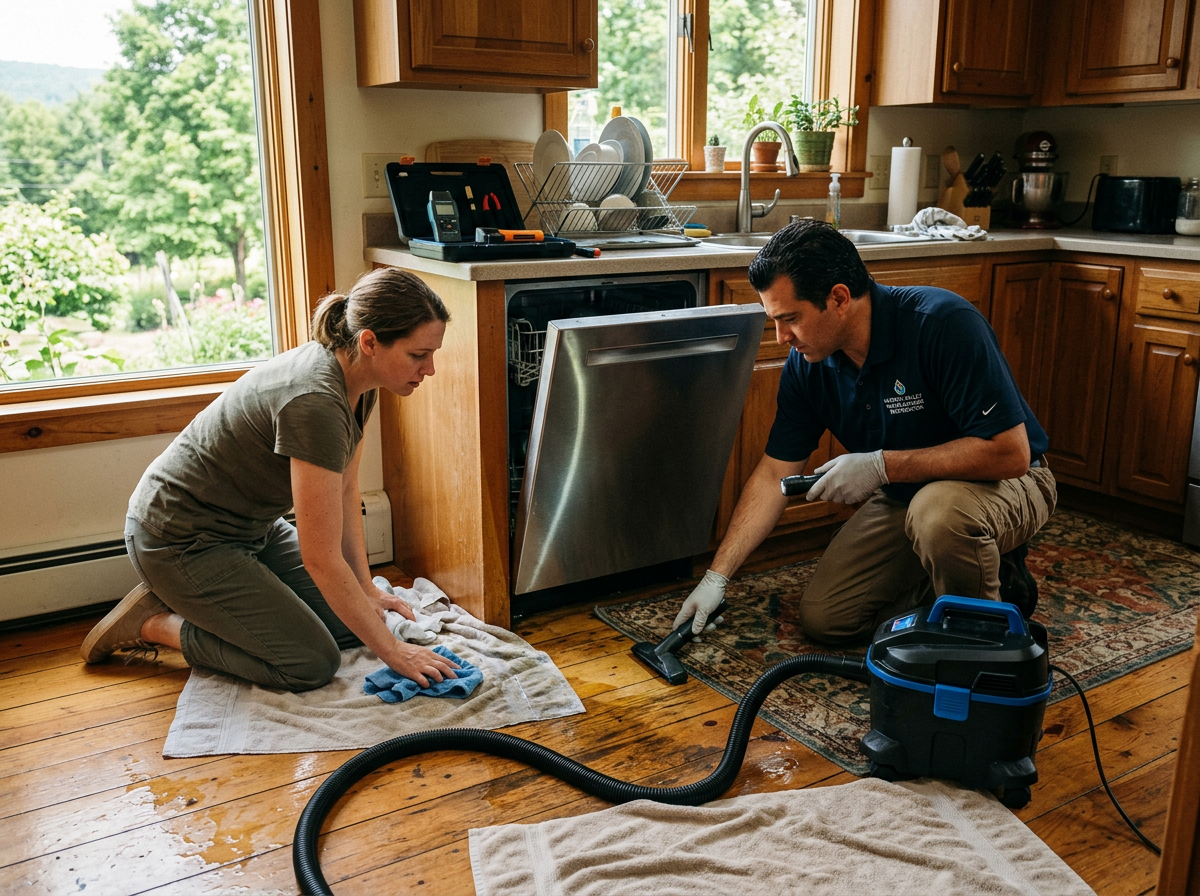
When an appliance leak occurs in a kitchen or laundry room, stop the water source immediately, shut off power to affected outlets if safe, and begin extraction within the first hour to limit migration into subfloors and cabinets. In Hudson Valley homes, winter leaks from washing machines or dishwashers often worsen when temperatures drop and pipes freeze, turning a small drip into a steady flow once ice thaws.
Common Sources of Appliance Leaks
Washing machines account for many laundry-room leaks when supply hoses crack after repeated freeze-thaw cycles common along the tidal Hudson. Dishwashers leak at door gaskets or drain hoses, especially in older Tarrytown homes where fieldstone foundations allow minor floor movement that stresses connections. Refrigerators with built-in ice makers develop pinhole leaks in supply lines behind the unit, and the water can travel under cabinets before homeowners notice. Checking hoses every six months and replacing rubber supply lines on a five-year schedule reduces these incidents in river-slope properties where vibration from nor'easters loosens fittings.
First Actions After Discovering a Leak
Turn off the appliance water supply valve, usually located under the sink or behind the washer, then unplug the unit. Use towels or a wet-dry vacuum to remove visible water, paying special attention to the space between the appliance and wall where moisture hides. Place a moisture meter on the floor and base cabinets; readings above 15 percent indicate hidden saturation that needs professional drying equipment. In homes with sump systems, verify the pump still operates during power interruptions that often accompany winter storms, because standing water from an appliance leak can quickly join groundwater already entering through weeping fieldstone.
Hidden Risks in Local Homes
Kitchens and laundry rooms in 19th-century Hudson Valley houses frequently sit above crawl spaces or unfinished basements where leaked water reaches wooden joists within hours. Once moisture reaches 60 percent relative humidity for more than 48 hours, mold colonies can begin on paper-faced drywall and wood trim. Winter leaks compound this because cold air holds less moisture, so water vapor condenses on colder surfaces and extends the wet zone. Homeowners who open windows to ventilate after a leak can actually increase humidity if outdoor temperatures remain below freezing, slowing natural drying.
Knowing When Professional Help Is Needed
If water has reached under flooring, entered wall cavities, or the leak source remains unclear after basic shutoff, contact a local restoration team for extraction and drying. Emergency water removal crews bring commercial air movers and dehumidifiers that achieve 40-50 percent relative humidity targets faster than household fans. When moisture meter readings stay elevated after 72 hours of DIY efforts, water damage restoration services can prevent progression to mold issues addressed in mold remediation. Readers comparing options may also review DIY vs Professional Water Extraction for Minor Leaks to decide whether their situation fits the scope of homeowner tools.