
2026-09-13 ·
Impact of Climate on Water Damage in the Hudson Valley
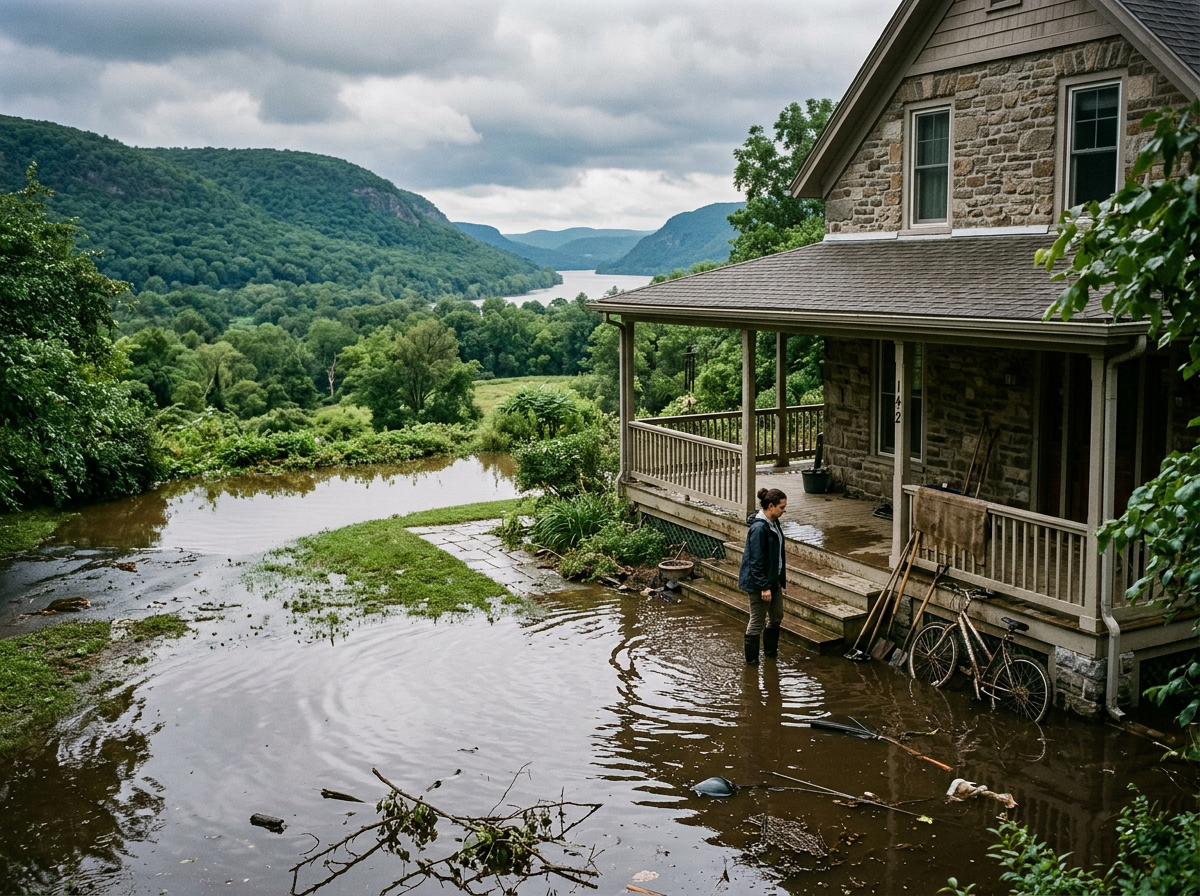
Hudson Valley climate produces water damage through rapid temperature swings, heavy winter precipitation and coastal storm surges that push tidal waters north to Troy. Ice dams form on 19th-century roofs during January and February freezes, forcing meltwater under shingles and into fieldstone foundations that already weep from hydrostatic pressure. Category 1 water from these sources often degrades to Category 2 within 48 hours when it contacts organic materials, while mold colonies can appear on wet drywall or insulation in 24 to 48 hours once humidity stays elevated.
Winter Freezes and Ice Dams
January and February temperatures frequently drop below freezing for days at a time, causing pipes in unheated crawl spaces and exterior walls to burst. The resulting water spreads quickly through balloon-framed homes common along the river slopes from Tarrytown northward. Ice dams compound the problem by trapping meltwater against roof decks, allowing it to seep into attics and second-floor ceilings. Homeowners in areas like Irvington and Dobbs Ferry often discover these leaks only after water reaches the first floor. Prompt extraction prevents the water from migrating into wall cavities where it can remain hidden for weeks.
Nor'easters and Storm Surges
Coastal storms push tidal surges up the Hudson, overwhelming low-lying basements in river towns during power outages that disable sump pumps. These events combine heavy rain with wind-driven water that enters through foundation cracks and window wells. Properties in Hastings-on-Hudson and Piermont face repeated exposure because their older fieldstone foundations lack modern waterproofing. Water that enters during a nor'easter can remain trapped behind finished walls, raising moisture readings above 20 percent for extended periods. What to Expect from Water Damage Restoration After a Nor'easter outlines the sequence of extraction, drying and monitoring that follows these storms.
Humidity, Drying Times and Mold Risk
Hudson Valley summers maintain outdoor humidity levels that slow indoor drying even after visible water is removed. Moisture meters typically show that structural materials require 3 to 5 days of continuous dehumidification to reach safe levels below 15 percent when ambient conditions stay above 70 percent relative humidity. Wet organic materials left untreated for 24 to 48 hours support mold growth that spreads through HVAC systems in multi-story homes. How to Prevent Mold After Basement Flooding in the Hudson Valley details the ventilation and monitoring steps that limit this progression. Mold Remediation addresses colonies that have already established in wall cavities or under flooring.
Older Foundations and Basement Vulnerability
Fieldstone foundations built before 1900 absorb and release moisture with each seasonal cycle, creating chronic dampness that worsens during heavy spring rains or fall hurricanes. Sump failures during nor'easter power cuts allow groundwater to rise several inches overnight in basements throughout Westchester and Rockland counties. Flooded Basement Cleanup focuses on these below-grade spaces where water mixes with silt and becomes Category 2 quickly. Consistent use of moisture meters confirms when drying is complete rather than relying on surface appearance alone.
Homeowners can reduce long-term risk by scheduling seasonal roof and gutter inspections before winter and ensuring backup power for sump systems. When water intrusion occurs, early measurement of moisture levels and removal of affected materials limit both structural damage and secondary mold growth. Our team at 629 White Plains Rd, Tarrytown, NY 10591 responds to these climate-driven incidents across the Hudson Valley with equipment sized for the region's typical home sizes and construction types.