
2026-09-13 ·
Protecting Your Tarrytown Business from Water Damage
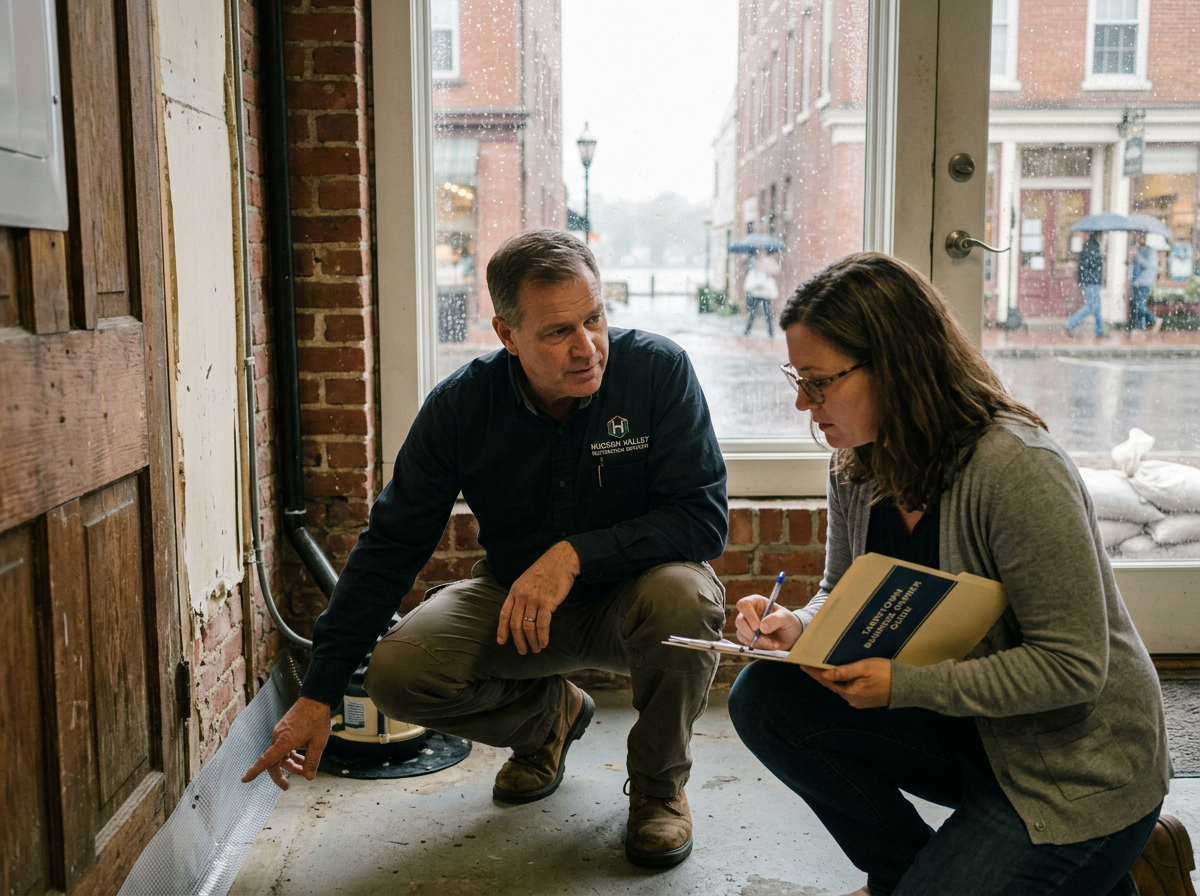
Tarrytown businesses can reduce water damage impact by monitoring for sump pump failure during nor'easters and addressing leaks before Category 1 water degrades to Category 2 within 48 hours. Local 19th-century river-slope buildings with fieldstone foundations that weep during high tides require consistent checks, especially when January-February temperatures drop and ice dams form on older roofs. Early detection paired with targeted extraction keeps moisture below levels that allow mold growth on organic materials within 24-48 hours.
Local Water Risks for Tarrytown Commercial Properties
Tarrytown sits along the tidal Hudson where storm surges combine with heavy rain to overwhelm low-lying commercial sites. Fieldstone foundations in buildings constructed before 1900 allow groundwater to seep when river levels rise, particularly near the waterfront and along White Plains Road corridors. Power outages during nor'easters disable sumps in basements that store inventory or mechanical equipment, allowing standing water to remain for hours. Ice dams form on sloped roofs when daytime melt refreezes at night, sending water under flashing and into upper floors. These patterns repeat most winters, so owners track forecasts and keep battery backups tested rather than reacting after water reaches floor level.
Monitoring and Early Detection Practices
Install moisture meters at foundation walls and near sump pits to record readings before and after storms. Check these readings daily during periods when temperatures hover near freezing, because ice dams and frozen pipe bursts often begin overnight. Walk through storage areas and mechanical rooms weekly to note any new damp patches on concrete or wood. Keep a log of humidity levels aiming to stay under 60 percent in conditioned spaces. When readings climb steadily, locate the source immediately instead of waiting for visible pooling. These habits catch issues while water remains Category 1 and easier to extract before it contacts carpet, drywall, or stored goods.
Response Steps When Water Appears
Shut off the main water supply at the first sign of active leaking, then document the affected area with photos and timestamps. Remove standing water using wet vacuums or pumps within the first few hours to prevent migration into adjacent rooms. Move inventory and equipment to dry zones while surfaces are still damp rather than soaked. Increase airflow with fans directed across wet materials and run dehumidifiers set to pull moisture down to 45-50 percent relative humidity. Continue meter checks every four hours until readings stabilize at pre-incident levels, which often takes three to five days depending on material thickness and airflow. For guidance on handling minor leaks without professional equipment, review the differences outlined in DIY vs Professional Water Extraction for Minor Leaks.
Prevention Measures for Older Tarrytown Buildings
Clean gutters and downspouts before each winter to reduce ice dam formation on commercial roofs. Install or upgrade battery backup systems for sump pumps so they continue during the multi-hour outages common with coastal storms. Seal visible cracks in fieldstone foundations with hydraulic cement rated for constant moisture exposure. Route downspouts at least six feet from foundation walls to limit hydrostatic pressure against lower levels. Locate and label emergency water shutoff valves in advance, following the building-specific guidance in Emergency Water Shutoff Locations in Older Homes. These steps address the recurring winter and tidal conditions that affect Tarrytown commercial stock.
When Professional Extraction Supports Business Continuity
When water has contacted multiple rooms, electrical systems, or inventory that cannot be moved quickly, contact a local team for extraction and drying verification. Hudson Valley Flood Response, based at 629 White Plains Rd, Tarrytown, NY 10591, provides commercial water damage restoration and emergency water removal using meters to confirm dryness rather than visual inspection alone. Their response focuses on returning spaces to pre-loss moisture levels within the shortest practical window. For broader water damage restoration needs across the valley, the same local crews coordinate drying equipment sized for commercial square footage. Owners who maintain logs and act within the first day typically limit disruption to a few days instead of weeks.